
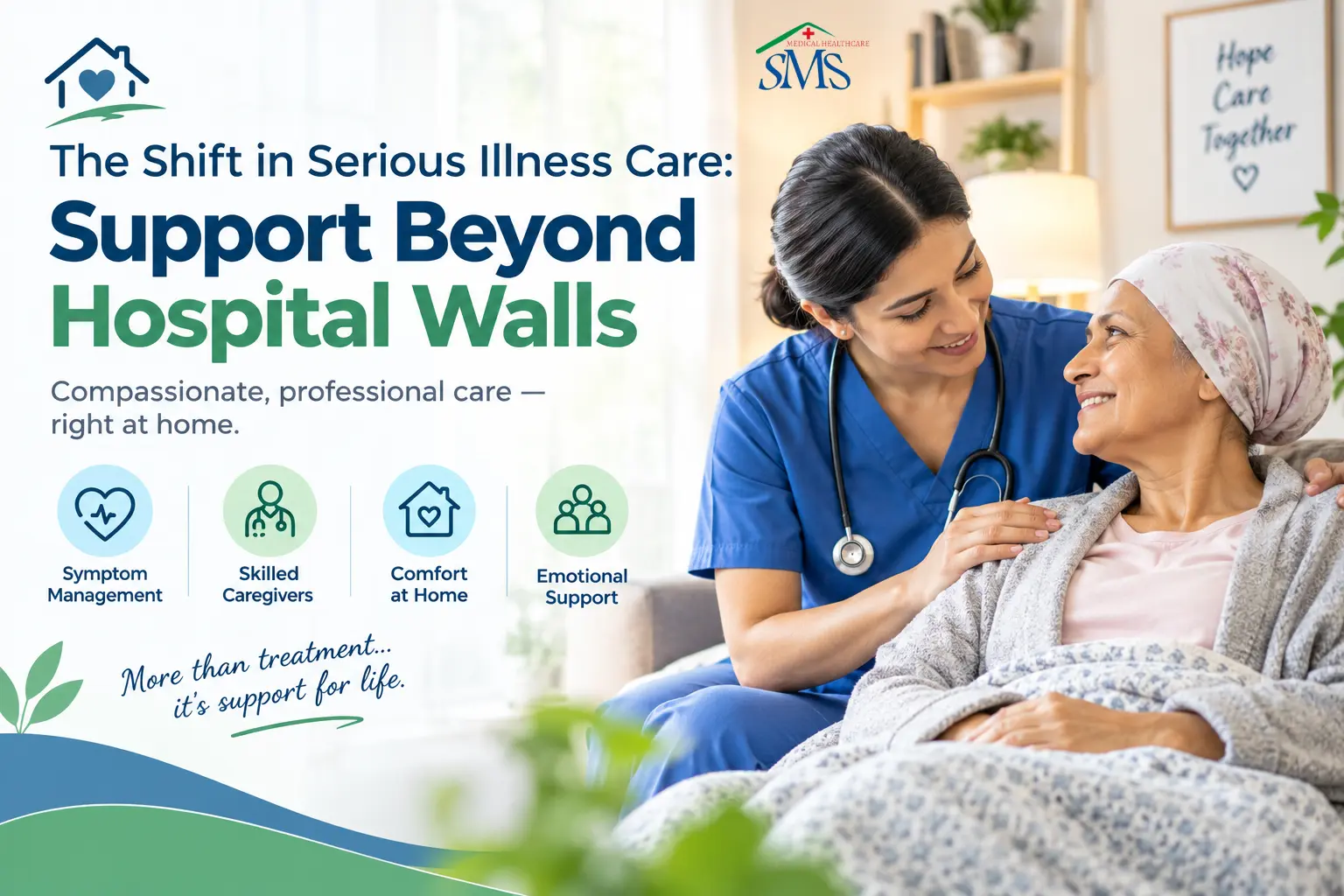
Serious illness care is changing in a big way. Earlier, patients with conditions like cancer had to stay in hospitals for long periods, often far from family comfort. Today, a growing number of families are choosing structured home-based care that brings medical support and emotional comfort together in one place.
This shift is not about replacing hospitals. It’s about extending care beyond them, so patients can recover or manage illness in a more familiar, peaceful environment.
Why Home-Based Cancer Care Is Growing
Cancer treatment is physically and emotionally demanding. Frequent hospital visits, long chemotherapy cycles, and post-treatment weakness can be exhausting for patients and families.
This is where cancer care at home is becoming a practical alternative for many situations. It allows patients to receive medical supervision, symptom management, and nursing support without constant hospital admission.
The biggest advantage is comfort. Being at home helps reduce stress, improves rest, and keeps patients closer to their support system, which plays a major role in overall well-being.
What Home Care Actually Looks Like
Many people assume home care is limited, but modern home care for cancer patients is quite structured and medically supervised.
It can include pain management support, IV or injection assistance when prescribed, wound care after surgery, nutritional guidance, and regular health monitoring. In many cases, trained nurses and caregivers coordinate with doctors to ensure treatment continuity at home.
The idea is simple: the patient gets hospital-level attention without losing the comfort of home.
Emotional Strength Plays a Bigger Role Than We Think
Serious illness is not only physical. Anxiety, fear, and emotional fatigue often affect recovery and quality of life.
At home, patients feel more in control. They sleep better, eat in a more relaxed environment, and stay connected with family members. This emotional stability can make a noticeable difference in how they respond to treatment.
Family involvement also becomes more natural, helping patients feel supported instead of isolated.
When Hospital or Nursing Care Is Still Needed
Home care is not a replacement for intensive hospital treatment. There are times when medical supervision in a controlled environment is necessary, especially during critical phases of treatment or complications.
Some families also prefer structured nursing home care for cancer patients when they need a balance between medical supervision and a managed care setting. It provides professional nursing support while still offering a more comfortable environment compared to traditional hospital wards.
The choice depends on the patient’s condition, treatment stage, and medical advice.
The Real Shift: From Facility-Based to Patient-Centered Care
What’s changing today is the focus. Care is no longer only about where treatment happens, but how it is delivered.
Patients now have more options to stay at home longer, reduce hospital dependency, and still receive proper medical attention. This approach also reduces the financial and emotional pressure that often comes with prolonged hospitalization.
Families are becoming more involved, and care is becoming more personalized instead of one-size-fits-all.
Final Thoughts
Serious illness care is no longer limited to hospital walls. With better planning, trained support, and medical coordination, patients can now receive safe and effective care at home or in supportive nursing environments.
Whether it is cancer care at home, structured home care for cancer patients, or managed nursing home care for cancer patients, the goal remains the same—comfort, dignity, and consistent medical support throughout the journey.
No responses yet